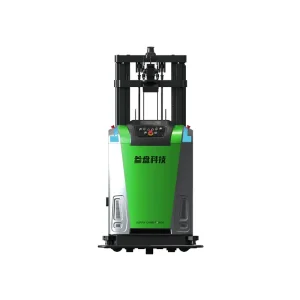
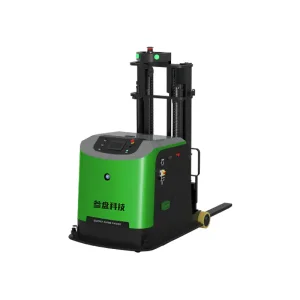
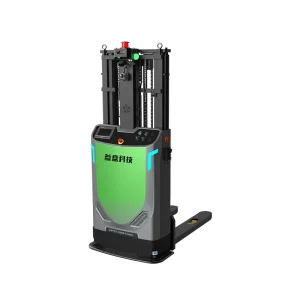
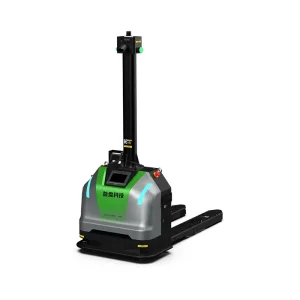
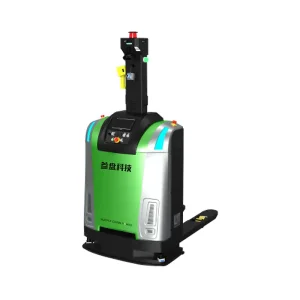
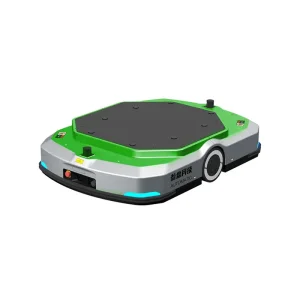
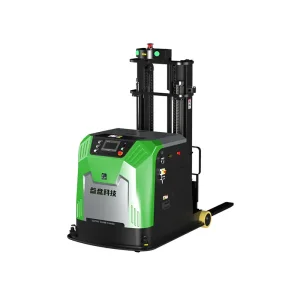
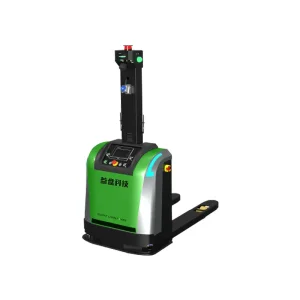
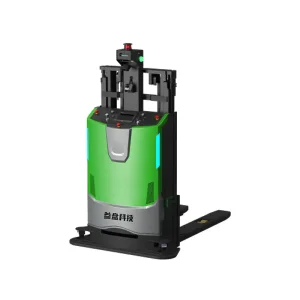
Discover our premier selection of high-precision autonomous guided vehicles and robust mobile robot platforms developed for modern industrial automation.
The global industrial sector is undergoing a profound paradigm shift driven by the imperative of automation. In the center of this transformation lies the AGV (Automated Guided Vehicle) conveyor system. By fusing the mobility of AGVs with the continuous loading capabilities of traditional conveyor platforms, modern factories are eliminating fixed-path constraints and structural overhead.
Industry reports demonstrate that the worldwide market for automated guided vehicles and mobile robots is growing at a compound annual rate (CAGR) of over 18%. This growth is heavily supported by the logistics, automotive, chemical, and food processing industries. Companies transitioning to flexible manufacturing rely on modular conveyor-integrated AGVs to orchestrate seamless, touch-free internal logistics networks.
By leveraging Laser SLAM (Simultaneous Localization and Mapping), these vehicles no longer require intrusive floor markers or wire guidance. Instead, they dynamically map factory layout variations, optimize handling paths in real-time, and dock with high precision to stationary receiving belts, establishing a continuous flow of goods.
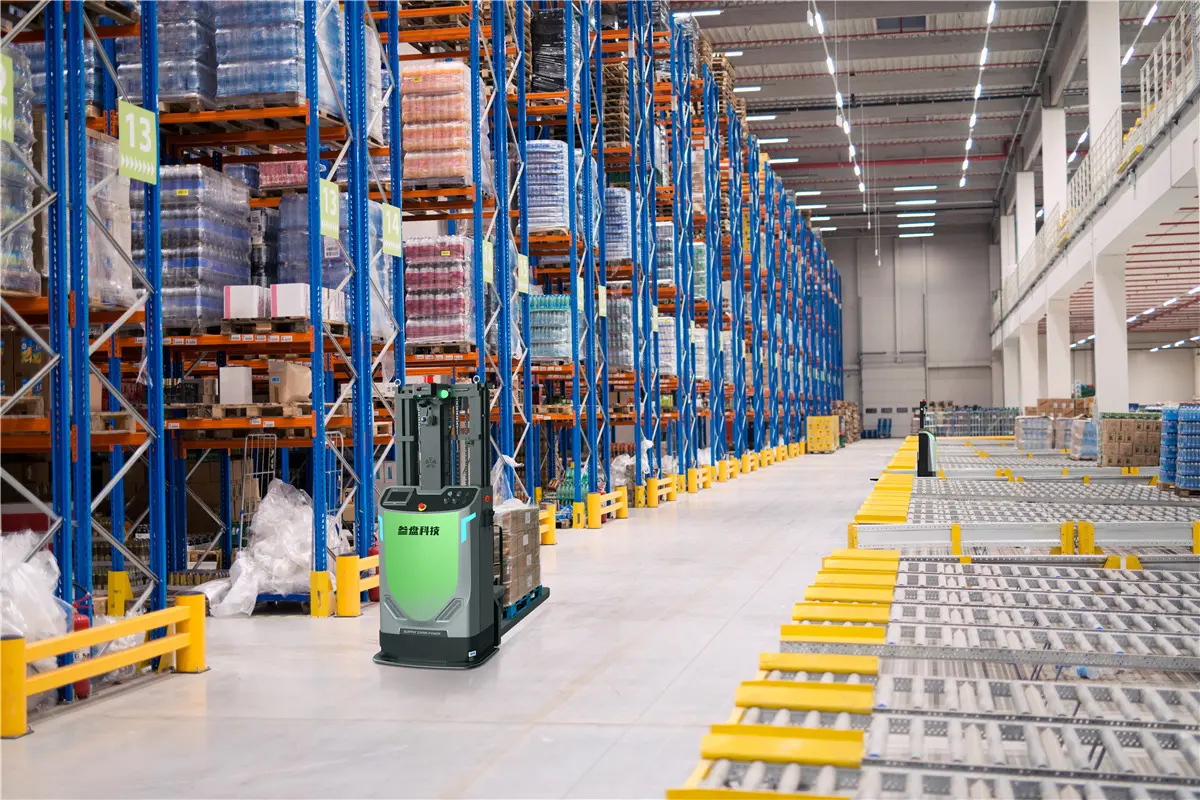
Elevating supply chain execution with dynamic, agile, and digitalized technological synergy.
We provide comprehensive end-to-end supply chain solutions. Taking actual business needs as the cornerstone, we establish a product architecture supported by high-performance software systems and intelligent robotic hardware.
Our top-level design incorporates a centralized Supply Chain Control Tower. This system offers multi-role and multi-dimensional visibility, facilitating all-round collaboration, real-time tracking, and process optimization across platforms.
By coordinating intelligent hardware like Laser SLAM forklifts and flexible mobile chassis with ERP systems, we help enterprises establish an agile, resilient, and adaptive warehouse execution layer.
Benefiting farmers and bringing welfare to consumers through the deep integration of clean technology and food logistics chains.
Leading the technological upgrade of the global supply chain, maximizing automation efficiency, and achieving extraordinary value.
Serving as the premier Alliance of Developers of New Quality Supply Chain Technology, providing robust commercial solutions globally.
Unveiling the structural, technological, and supply-chain efficiencies that empower our Chinese manufacturing hubs.
China's manufacturing ecosystem stands as a global leader in intelligent robotics and automation systems. When comparing global AGV conveyor manufacturing sources, Chinese facilities provide distinctive advantages that translate directly into operational capital savings and rapid deployment capability for international clients:
Architecting future-proof logistics that integrate ecological safety, technical longevity, and resource conservation.
We continually scale our technological investments, focusing heavily on hardware-software optimization and digital supply chain towers. By strengthening internal capabilities across procurement, assembly, and testing stages, we ensure robust, reliable, and energy-efficient operations. Our constant exploration of AI path-finding and sensor integration delivers systems that consume less energy while achieving maximum operational output.
Backed by extensive industry assets within food processing and cold chain networks, we engineer automated solutions tailored for delicate storage parameters and high-hygiene requirements. We collaborate closely with international partners, integrating foreign structural standards with local manufacturing capabilities to offer specialized systems globally.
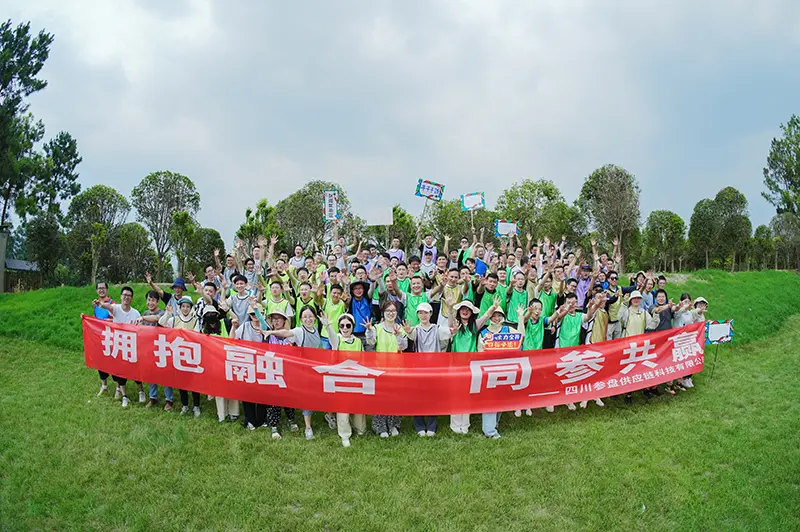
Our design logic is anchored on sustainability. We construct our AGV and conveyor configurations to utilize recyclable alloys, energy-efficient brushless motors, and smart sleep-mode cycles. By prolonging equipment service lifetime and facilitating easy component refurbishment, we minimize overall lifecycle waste for our global client base.
Bridging the gap between raw hardware manufacturing and full-scale factory optimization.
As a proud subsidiary of New Hope Group, we possess deep sector insights, strong capital backing, and a solid market reputation across complex industrial landscapes.
We were incubated directly from internal digital enterprise demands, meaning we design systems focused on practical efficiency and solving genuine operational pain points.
We write and control our proprietary codebases for material dispatching, fleet management, and controller boards, allowing for customization without third-party licensing delays.
We offer consulting services alongside physical installation, helping clients redesign workflows, evaluate layout efficiencies, and determine return-on-investment parameters.
Our professional team handles mechanical setup, digital system configuration, and safety tuning, ensuring project handover remains on-schedule and compliant with design metrics.
SCP focuses on providing comprehensive solutions for the food supply chain, as well as researching and developing intelligent software and hardware systems. By utilizing the Internet of Things (IoT), AI, machine learning, and high-performance sensor suites, we bridge the gap between static warehousing and dynamic operations. Our automated solutions optimize raw material delivery, production-line replenishment, and finished goods warehouse consolidation, generating maximum value across industrial operations.

Our engineering design, safety configurations, and management methodologies conform to strict global standardization frameworks.







Discover how autonomous mobile conveyor platforms adapt across challenging, high-throughput commercial applications globally.
Operating under sub-zero conditions, our AGVs with built-in heaters and anti-condensation optics handle critical food transfers from cold rooms to processing areas, maintaining strict food safety compliance and an uninterrupted cold chain.
Integrating heavy-load conveying systems with plant ERP, chassis systems deliver engines, battery modules, and transmissions directly to assembly bays with millimeter precision, replacing static rail lines.
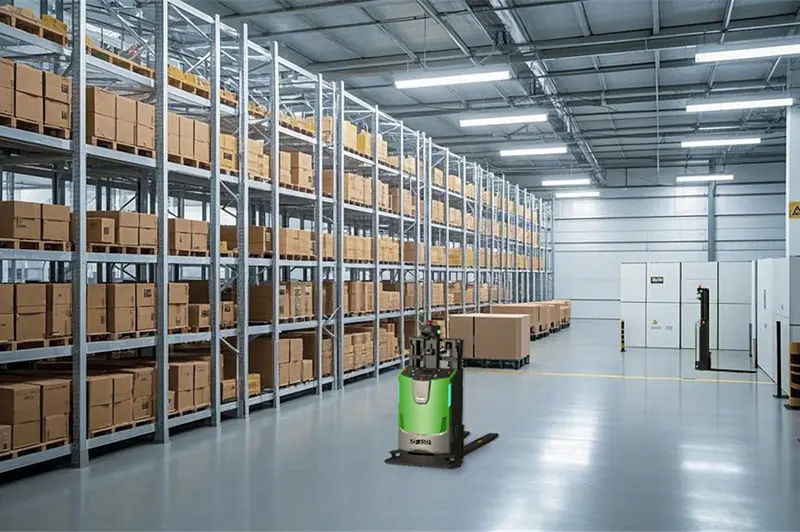
Navigating compact, narrow-aisle environments, smart SLAM stackers manage micro-component totes, placing bins onto localized conveyor belts without human intervention to optimize cycle times.
As industries approach Industry 4.0 status, several trends dominate the design criteria of advanced AGV conveyors:
1. Shift to Multi-Sensor Fusion SLAM: While basic laser SLAM utilizes geometric contours, modern autonomous platforms employ visual-SLAM and inertial measurement units (IMUs) to navigate changes in dynamic surroundings safely.
2. Dynamic Dispatching Algorithms (Fleet Management): The integration of machine learning allows systems to dispatch 100+ AGVs simultaneously, optimizing route planning, battery recharging schedules, and bottleneck avoidance in real-time.
3. High-Voltage Fast Charging Systems: Modern fleets are moving toward lithium iron phosphate (LiFePO4) systems with fast-charging contacts, allowing vehicles to charge for 10 minutes during brief operational pauses to achieve continuous 24/7 runtimes.
Addressing essential technical and commercial questions for engineers and purchasing managers.
Explore our selection of intelligent warehouse stackers and automated forklifts designed for heavy-duty payload optimization.
 SCP
SCP