Explore our premier configurations designed for high efficiency, safety, and rapid warehouse deployment
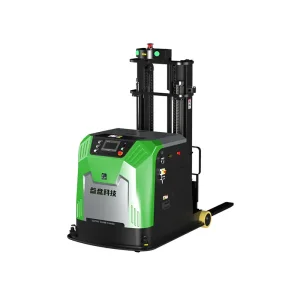
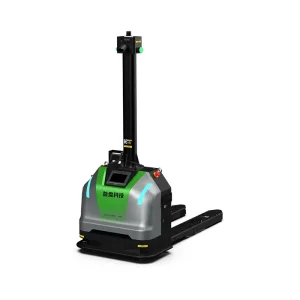
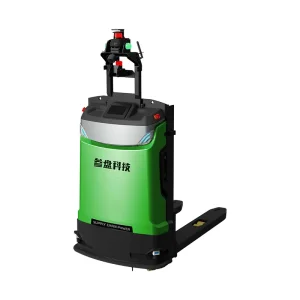
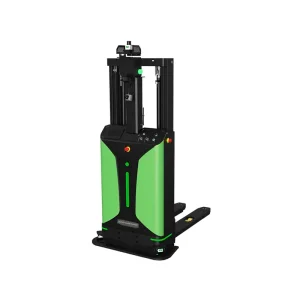
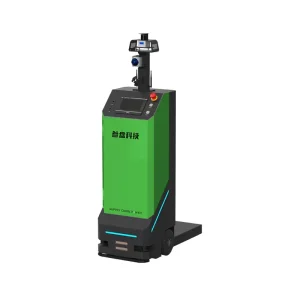
The global manufacturing and warehousing industries are undergoing an unprecedented shift towards intelligent automation. Within this landscape, AGV (Automated Guided Vehicle) Pallet Movers and intelligent laser SLAM forklifts have emerged as pivotal assets. Traditionally, mechanical transport systems relied on magnetic tape navigation, which constrained material flows within static parameters. The arrival of Natural Feature and Laser SLAM (Simultaneous Localization and Mapping) technology has decoupled autonomous industrial vehicles from rigid floor guides, allowing for real-time path planning and high-precision spatial awareness.
By bypassing the infrastructure-heavy components of older automated fleets, modern warehouse facilities can deploy systems dynamically. Today, China stands as a global hub for AGV pallet mover innovations. Manufacturers utilize vast component ecosystems, from LiDAR sensors to motor drives, coupled with robust algorithmic capabilities. This positioning guarantees optimal system stability, precise payload handling (ranging from 300kg to over 3000kg), and high system integration compatibility.
Pioneering end-to-end supply chain logistics with a digital, hardware-backed blueprint
As a subsidiary of New Hope Group, we possess an established market reputation and execute solutions supported by a profound understanding of cross-industry demands.
We boast proprietary hardware and software design, facilitating customized integrations across procurement, production, sales, and supply chain control towers.
From custom system engineering to rapid site delivery, our specialist teams ensure smooth transition processes, minimizing warehouse downtime.
Benefiting farmers and bringing welfare to consumers by engineering optimized, smart supply chain technology ecosystems from farms to urban households.
Leading the technological upgrade of the modern supply chain, creating tangible, extraordinary value for businesses transforming into the Industry 4.0 era.
Serving as an alliance of developers of next-generation supply chain technology, bridging hardware capabilities with intelligent warehouse logistics software.
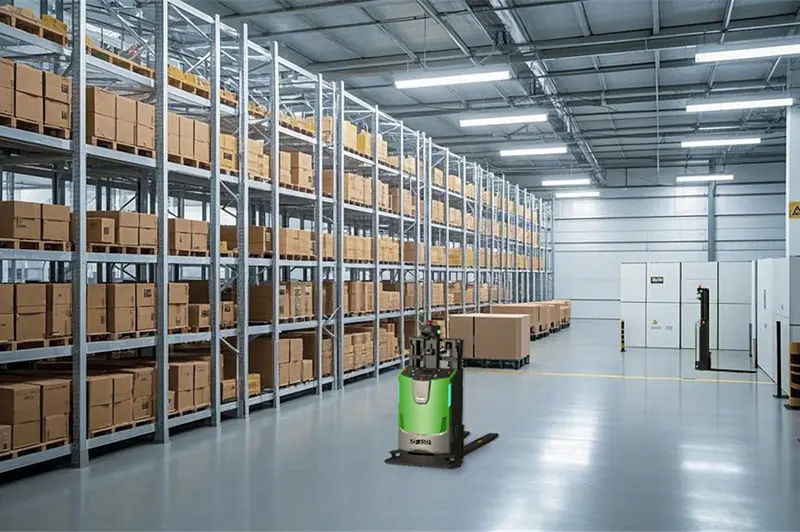
The technical configuration of AGV pallet movers is rapidly pivoting toward hybrid navigation architecture. Historically, laser systems utilized reflectors placed at static points in the warehouse. Today's industrial environments demand dynamic SLAM (Simultaneous Localization and Mapping) systems. By mapping the environment using multiple sensor modalities (combining LiDAR, 3D vision, and inertial measurement units), the modern pallet mover recognizes moving obstacles, adjusts paths instantly, and maintains ±10mm docking precision.
Additionally, developments in battery technology have transformed operation cycles. Advancements in Lithium Iron Phosphate (LiFePO4) battery modules facilitate rapid opportunity charging. AGVs can now dock at charge points during short idle periods, ensuring continuous 24/7 service without dedicated fleet downtime. With automated, cloud-based fleet managers (WCS/WMS), tasks are prioritized automatically based on real-time order demands.
Why do global enterprises partner with Chinese AGV manufacturers and factories? The answer lies in the deep integration of the local production ecosystem. China's manufacturing clusters assemble research institutes, hardware designers, sensor engineers, and assembly plants in close geographic proximity. This concentration allows for rapid design iteration, low tooling overheads, and responsive adaptation to unique customer specs.
Moreover, modern Chinese factories operate under strict ISO and CE guidelines, ensuring that forklifts and automated pallet jacks comply with international functional safety standards (such as ISO 3691-4). This integration of safety systems, including dual-LiDAR safety fields, mechanical collision buffers, and emergency stop configurations, guarantees high-reliability operations in complex setups where human workers and automated machines share common aisles.

Sustainable industrial operations demand cleaner material handling solutions. Forklift automation plays an integral role in reducing carbon emissions. Electric-driven automated guided vehicles offer significant energy savings compared to conventional diesel or internal combustion engine units. By implementing optimized pathfinding algorithms, smart AGVs minimize idle transit, optimize load distributions, and lower the overall electricity consumption of the facility.
Furthermore, automation reduces damage to warehouse infrastructure, products, and pallets. By avoiding abrupt stops and mechanical impacts, these computerized assets prolong the operating life of racks, pallets, and floors. This reduction in replacement cycles directly supports a circular industrial economy, lowering the total carbon footprint of international shipping hubs and distribution centers.
Tailored automated vehicle solutions designed to excel across challenging environments
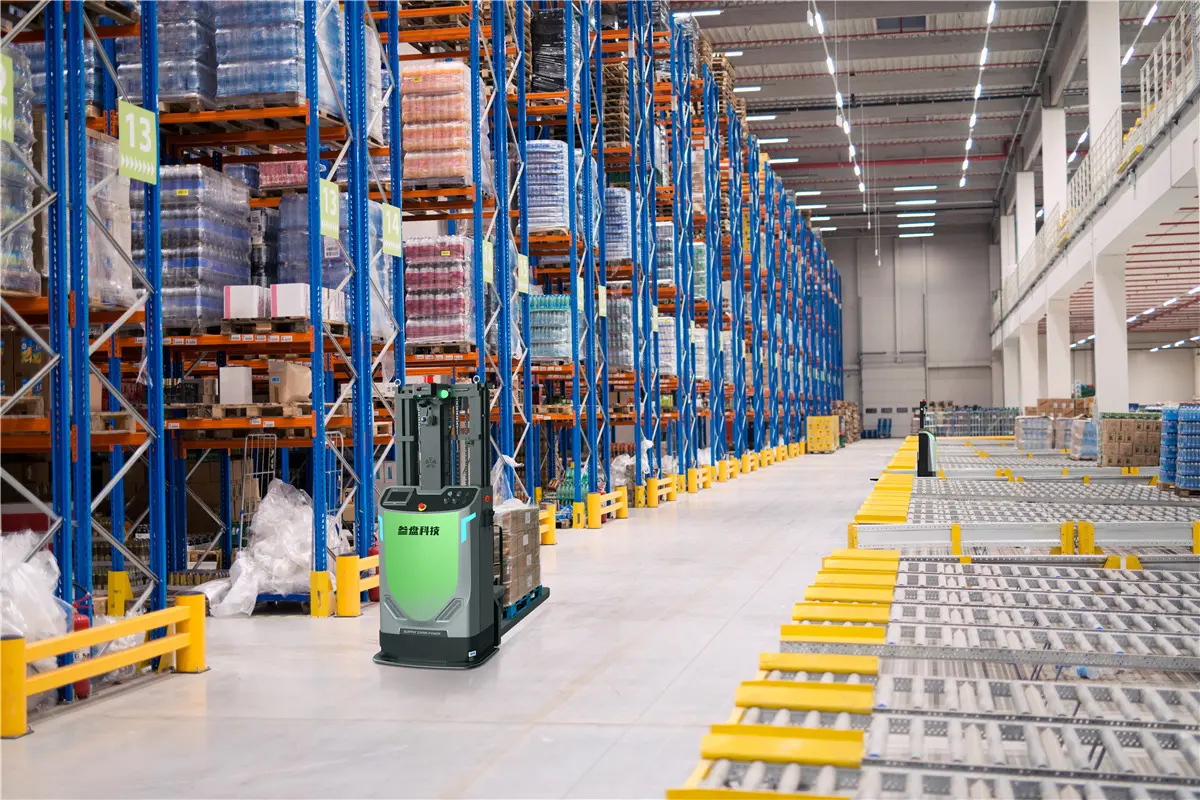
Specialized compact chassis and laser navigation allow our vehicles (like the CDD14 and CDD16 series) to rotate effortlessly in tight aisles. They perform precision rack picking and deep pallet placement without requiring wide clearance lanes.
Operating in environments with condensation and freezing temperatures (-20°C or lower) requires special protection classes. Our customized cold chain AGVs use sealed electronics and heated sensors to handle continuous cargo movements from freezer to loading dock.
Moving raw components directly to work cells demands real-time synchronization. By integrating with Manufacturing Execution Systems (MES), our smart forklifts receive automated dispatch signals, delivering material bins precisely on schedule.
Enhance throughput and weighing precision with factory-direct solutions
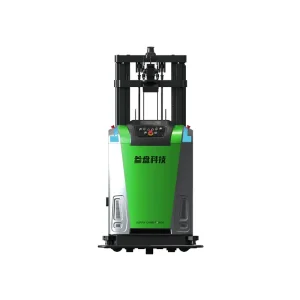
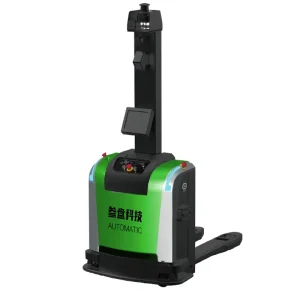
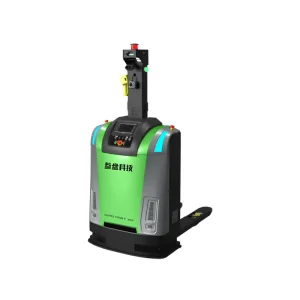
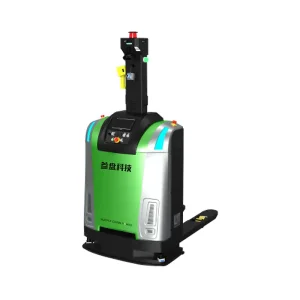
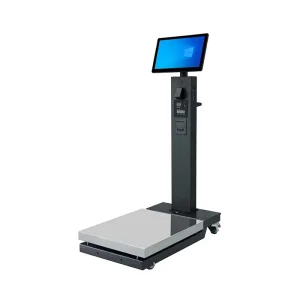
Our industrial systems conform to strict international benchmarks and safety requirements









SCP focuses on providing comprehensive solutions for the food supply chain, as well as research and development of intelligent software and hardware products and services. The company aims to be based on the Internet of Things AI, the comprehensive application of machine learning, intelligent devices and other technologies. Through automated, digitized, intelligent and systematic technology products and solution matrices, we enhance the overall operational efficiency of supply chain procurement, supply, and sales, and help upgrade the value of upstream and downstream industries.
By integrating cloud control towers with our laser SLAM automated vehicles, warehouse operations transition from reactive firefighting to predictive orchestration. The system identifies storage constraints, dynamically re-allocates AGV tasks, and manages battery charge phases so your operation maintains peak throughput without interruption.
Key considerations when selecting your next autonomous fleet configuration
While the initial capital expenditure of an automated pallet mover is higher than a manual pallet jack, the return on investment (ROI) is typically realized within 12 to 18 months. TCO calculations must include reduced operator injury claims, zero product/structural damage due to precise steering sensors, and the capability of running continuous multi-shift operations without additional labor overhead. In addition, laser SLAM forklifts do not require physical guidance tapes, saving installation cost and floor repair expenses.
Selecting the right navigation method depends heavily on environmental variables. LiDAR SLAM uses lasers to determine distances to nearby walls and posts, providing high reliability in dusty or variable lighting conditions. Visual SLAM (V-SLAM) utilizes cameras to read visual landmarks, offering cost advantages in large open spaces with complex structures. Many modern industrial complexes deploy hybrid units that combine both modalities to ensure localization robustness in challenging environments.
Enterprise deployments must align with region-specific standards. In Europe, machinery safety requires CE compliance along with the ISO 3691-4 standard for driverless industrial trucks. In North America, ANSI/ITSDF B56.5 regulates similar installations. Ensuring that your supplier integrates dual safety LiDARs, physical bumpers, warning sounders, and visual light projection is critical to obtaining site insurance approvals and passing local occupational safety audits.
An automated forklift is only as effective as the software dispatching it. Prioritize AGV suppliers who offer open API capabilities or pre-engineered modules to interface with standard Warehouse Management Systems (WMS) and Enterprise Resource Planning (ERP) systems. The fleet control system must handle traffic regulation, dispatch tasks based on optimal routes, and monitor diagnostics to ensure that error states are flagged instantly to prevent aisle blockages.
Expert technical answers to common queries regarding automated warehouse vehicles
 SCP
SCP