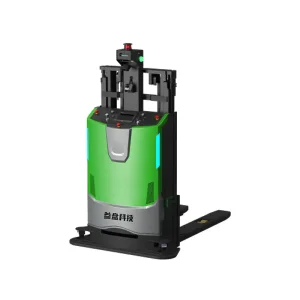
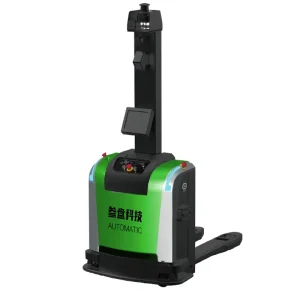
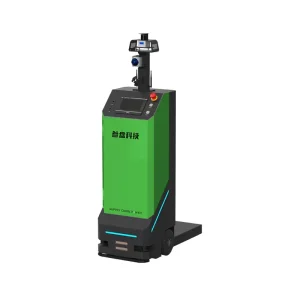
Explore our leading smart intralogistics models engineered for high capacity, agility in narrow aisles, and continuous operation.
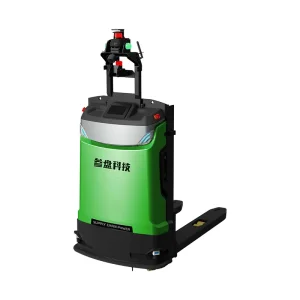
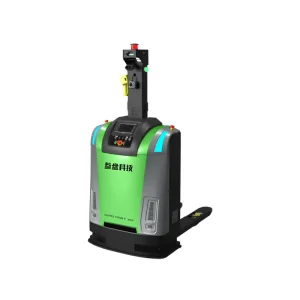
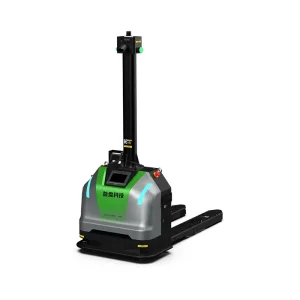
An in-depth analysis of autonomous guided vehicle technologies transforming the global industrial footprint.
The global material handling landscape is undergoing a massive shift towards automation. Modern manufacturing facilities, distribution centers, and high-density warehouses are increasingly replacing manual walkie stackers and traditional forklifts with Automated Guided Vehicle (AGV) pallet trucks. Driving this change is the need for consistent, 24/7 operations, higher safety standards, and real-time inventory tracking integrated directly into Warehouse Management Systems (WMS).
Rather than relying on fixed physical infrastructure, such as magnetic tape, optical lines, or inductive wires embedded in concrete floors, today's leading AGV pallet truck manufacturers deploy advanced Laser SLAM (Simultaneous Localization and Mapping) technology. This gives fleets the flexibility to adapt to changing floor layouts instantly, navigate complex narrow aisles, and operate safely alongside human workers and manual machinery.
By implementing a software-driven material handling model, modern enterprises can optimize their workflows, eliminate bottlenecks in pallet transport, and achieve a return on investment (ROI) that directly improves bottom-line profitability.
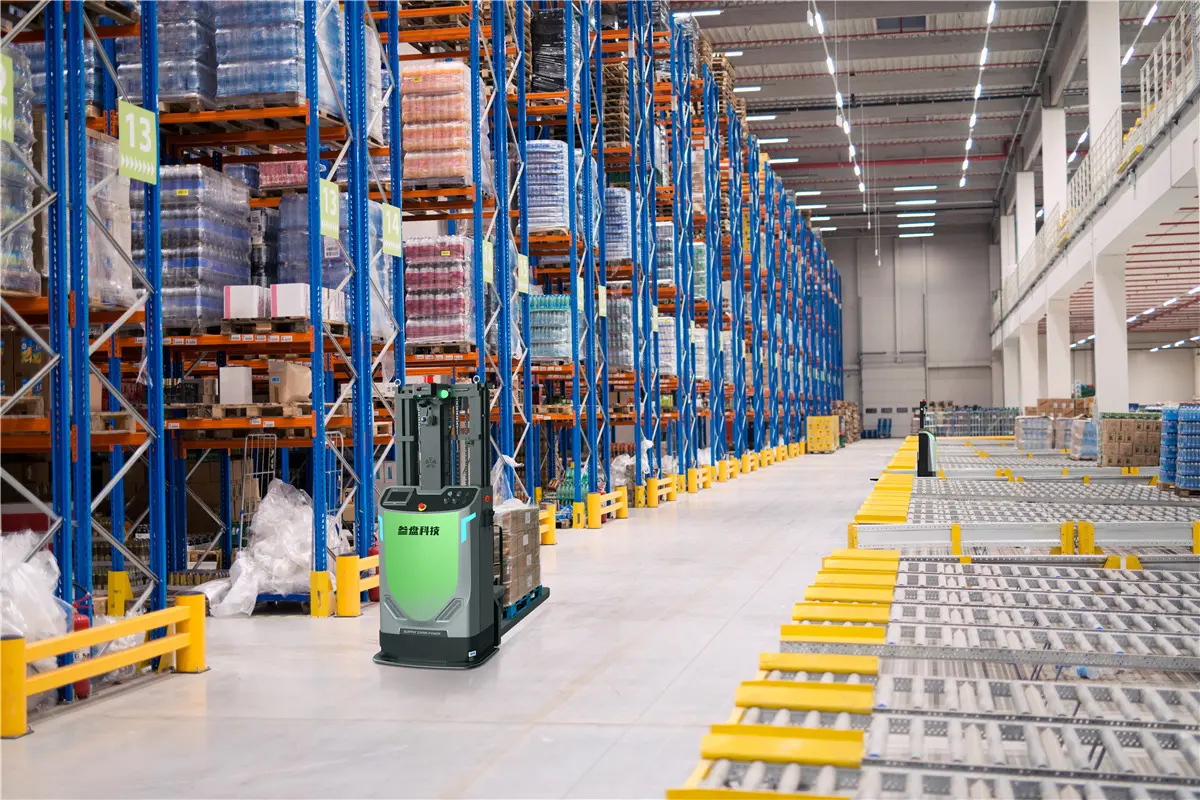
Product Architecture of SCP & Corporate Vision
Taking the actual business needs as the cornerstone, SCP is committed to comprehensively innovating and enhancing the overall supply chain planning of enterprises. We provide enterprises with comprehensive end-to-end supply chain solutions, build a multi-role and multi-dimensional intelligent supply chain collaboration system, and achieve all-round efficient collaboration and process optimization. At present, SCP has established a product architecture supported by software and hardware, and supplemented by the top-level design of the supply chain control tower to create an agile, flexible and efficient end-to-end supply chain system for enterprises.
Benefiting farmers and bringing welfare to consumers through optimized, automated, and intelligent food and goods supply chains.
Leading the technological upgrade of the supply chain and achieving extraordinary value for industry transformers worldwide.
Serving as a core Alliance of Developers of New Quality Supply Chain Technology, pioneering hardware and software automation.
Why enterprises choose SCP for supply chain automation and AGV fleet deployments.
As a subsidiary of New Hope Group, we have a strong market reputation and proven execution ability. Our teams hold an in-depth understanding of logistics across food, agriculture, cold chain, and heavy industries.
Incubated based on the digital needs of the business side within the New Hope system, we have participated in numerous commercial projects, allowing us to align robot behavior with actual operations.
We possess proprietary development and integration capabilities for systems in procurement, sales, and supply. This guarantees seamless connections between AGVs, WMS, and ERP layers.
We provide light consulting services alongside our hardware and software projects, covering process optimization, layout design, and digital transformation mapping.
Our dedicated delivery teams manage site configuration, SLAM mapping, safety zone testing, and staff training. We adapt to custom workflows to guarantee fast, high-quality deployment that keeps operational disruption to a minimum.
Analyzing Chinese production efficiency and global procurement requirements.
China has established itself as the global epicenter for industrial robotics and AGV manufacturing. By sourcing from a specialized Chinese factory, global buyers benefit from a mature ecosystem of lidar sensors, drive units, battery management systems (BMS), and precision structural components. This ecosystem significantly reduces both R&D cycle times and production costs without sacrificing quality.
Chinese factories are uniquely positioned to offer high-level customization, allowing clients to modify chassis configurations, sensor layouts, and fork lengths to meet specific regional requirements.
When selecting an AGV pallet truck factory, international buyers evaluate several key areas to protect their investment:
To support global deployments, manufacturers must establish regional support structures. This includes partnering with local system integrators to assist with installation, commissioning, and on-site maintenance. Remote diagnostic capabilities can resolve up to 90% of software issues instantly, preventing extended operational disruptions.
Ensuring compliance with local environmental and functional safety guidelines—such as UL certifications in North America or machinery directives in Europe—is a standard step in our delivery process.
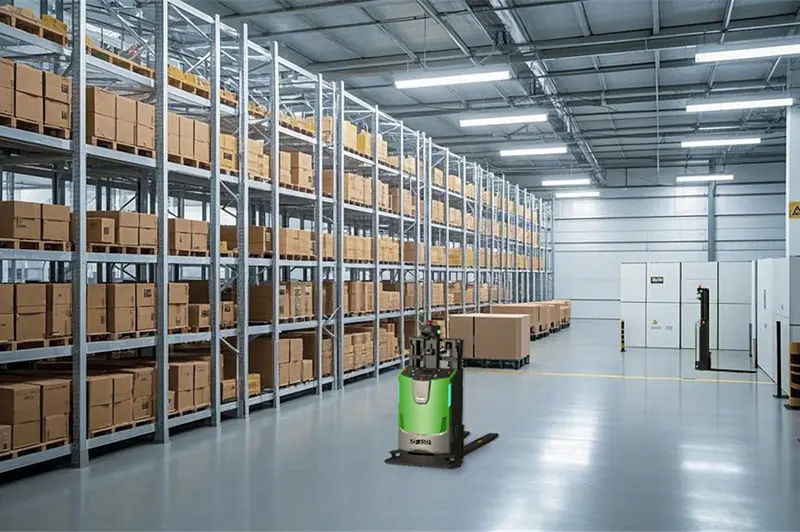
Balancing cutting-edge technology with ecological construction and long-term value.
SCP continues to invest in optimizing our software and hardware architectures. By strengthening our self-development capabilities, we continuously improve product capabilities, explore cutting-edge AI integrations, and keep our solutions at the forefront of the industry.
Drawing on the deep industry resources of Caogenziben and New Hope, we design tailored supply chain solutions for demanding environments like cold-chain food logistics. We also work closely with international partners to expand global market reach.
We approach growth with a long-term outlook, integrating environmental sustainability and efficiency into our daily operations. We aim to guide the industry toward a greener, smarter future while building reliable collaboration systems.
Our products and manufacturing facilities operate under strict, internationally recognized quality and safety certifications.








Combining Internet of Things (IoT), artificial intelligence, and automated guided vehicles into unified operations.

SCP focuses on providing comprehensive solutions for the food supply chain, alongside the design and development of intelligent software and hardware products. Through the integration of the Internet of Things, AI, machine learning, and automated devices, we build a robust technology and solutions matrix.
Our systems help optimize overall operational efficiency across procurement, supply, and sales channels. By automating material handling and streamlining information flow, we support the digital transformation of upstream and downstream partners alike.
Whether automating a cold storage facility or upgrading a manufacturing assembly line, our custom solution packages provide the tools needed to lower costs and maximize resource utilization.
An engineering-level review of autonomous navigation, drive electronics, and software systems.
Traditional Automated Guided Vehicles (AGVs) relied on physical markers like magnetic tape, barcode markers, or reflective targets for navigation. While these setups are reliable in simple configurations, they lack flexibility. Modifying a path requires stopping warehouse operations to physically alter the facility layout.
Modern Laser SLAM (Simultaneous Localization and Mapping) systems eliminate these limitations. Equipped with high-precision lidar sensors, SLAM-based forklifts build a digital map of their environment in real time. The on-board computer uses natural features—such as columns, walls, and racking—to determine the vehicle's position within millimeters. If an obstacle blocks a path, the software calculates an alternative route dynamically, ensuring safe, continuous workflows.
Safety is the primary consideration when introducing autonomous mobile robots into shared human-robot workspaces. Modern AGV pallet trucks feature multi-layered safety systems to meet international standards (such as ISO 3691-4):
To maximize efficiency, autonomous guided vehicles must connect with existing warehouse management systems. A fleet management system (FMS) acts as the bridge between the enterprise software (WMS/ERP) and the physical vehicles. When a pallet moves, the ERP generates a transport request, the FMS assigns it to the optimal AGV based on battery charge and location, and the AGV carries out the task with real-time status updates.
Common questions concerning AGV pallet truck purchasing, engineering, and logistics integration.
Most standard AGV pallet trucks handle payloads from 1,000 kg (1T) up to 2,000 kg (2T). Special heavy-duty models can be engineered for larger payloads depending on floor surface conditions and mast specifications.
Laser SLAM systems use lidar sensors to map real-world structural elements. When layouts change (e.g., stack patterns or parked equipment), the AGV updates its internal mapping data, allowing it to navigate dynamically around new obstacles without requiring physical markers on the floor.
Deployments must meet functional safety standards, notably ISO 3691-4 internationally, CE conformity in Europe, and ANSI/ITSDF B56.5 in North America. These standards dictate required system redundancy, obstacle detection ranges, and emergency-stop behaviors.
Most modern AGVs use long-life lithium iron phosphate (LiFePO4) batteries. When the charge level drops below a set threshold, the fleet manager routes the vehicle to a localized charging station for automatic contact charging, allowing for continuous, multi-shift operation.
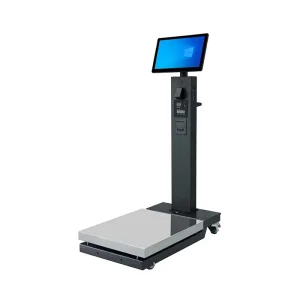
Complete your automation loop with high-capacity smart AGV platforms and interactive scaling systems.
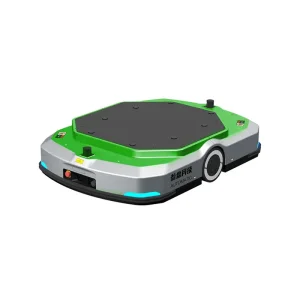
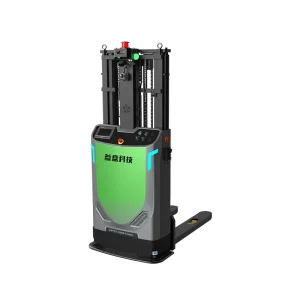
 SCP
SCP